
HVAC Dispatcher Training in 2026: Building the Backbone of Your Operation
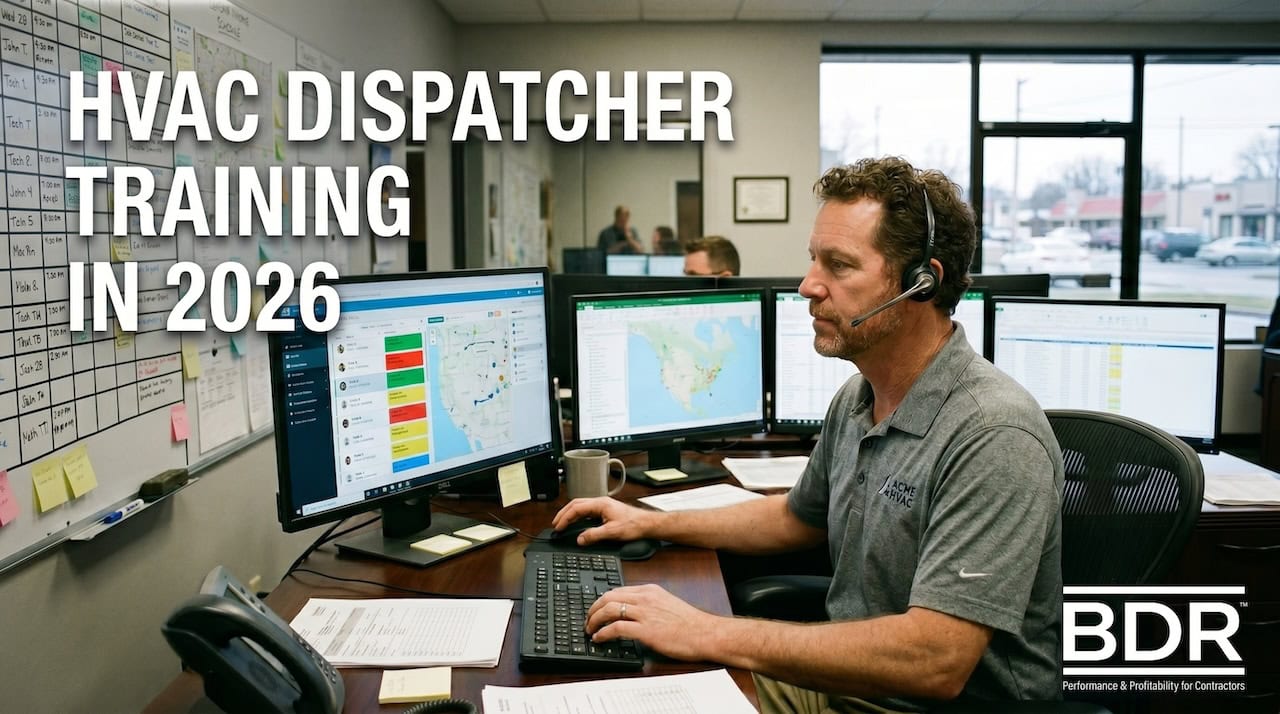
Your HVAC dispatchers handle every incoming call. They decide which tech goes where. They essentially plan out how every customer interaction flows before a truck ever leaves the lot.
And in most HVAC companies, they get almost zero formal training.
That gap shows up everywhere. Missed calls during peak season. Wrong tech sent to the wrong job. Customers who hang up frustrated before they ever book an appointment.
Your dispatch team is the backbone of your daily operation. When they’re trained well, your trucks run efficiently, your techs stay productive, and your customers feel taken care of from the first phone call.
In this article, we’ll walk through what great HVAC dispatcher training looks like, the skills that matter most, and how to build a dispatch operation that drives revenue instead of losing it.
What Happens When Your Dispatch Team Isn’t Trained
Here’s a scenario that plays out in HVAC companies every single day.
A homeowner calls during a July heatwave. Their AC is down. They’re stressed, their house is 90 degrees, and they want help now.
The person who answers the phone fumbles the call. They don’t ask the right questions. They can’t give a clear timeline. The customer hangs up and calls the next company on Google.
That lost call isn’t just a lost job. It’s a lost customer, a lost review, and lost referral revenue for years to come.
According to ServiceTitan’s 2026 dispatching guide, the best HVAC dispatch operations use structured call scripts, customer history lookups, and priority tagging to make sure every call gets handled with speed and accuracy.
Your dispatchers aren’t just answering phones. They’re your company’s first impression.
The Core Skills Every HVAC Dispatcher Needs
Great HVAC dispatchers aren’t born. They’re trained. And the training goes well beyond “answer the phone and schedule a call.”
Here are the skills that separate average dispatchers from great ones:
- Call booking fundamentals. Know what questions to ask, what information to collect, and how to set clear expectations for the customer. A structured intake process means your tech arrives prepared, not guessing.
- Job prioritization. Not every call is equal. A gas leak gets handled before a thermostat question. Emergency calls, no-cooling situations, and safety issues need clear priority protocols.
- Schedule optimization. Matching the right technician to the right job based on skill level, location, and availability. Housecall Pro recommends dispatching by geography to cut drive time and fit more calls into each day.
- Calm under pressure. Peak season means back-to-back calls, angry customers, and a board full of jobs. Dispatchers who stay composed keep the whole operation moving.
- Product and service knowledge. Your dispatch team should understand the scope of your HVAC services well enough to answer basic questions and set accurate expectations. They don’t need to diagnose a system, but they should know the difference between a tune-up and a full system evaluation.
How To Build a Dispatcher Training Program
Most HVAC companies don’t have a formal training program for dispatchers. The new hire sits next to someone experienced for a few days, listens in, and then they’re on their own.
That approach creates inconsistency. And inconsistency costs you calls.
A structured training program doesn’t have to be complicated. Here’s a framework that works:
Week 1: Shadowing and scripts. New dispatchers listen to calls, study the intake script, and learn your scheduling software.
Week 2: Supervised calls. The new dispatcher takes calls with a trainer listening in. After each call, they get immediate feedback on what went well and what to improve.
Week 3 to 4: Independent calls with daily check-ins. The dispatcher handles calls independently, but meets with their manager each morning to review the previous day’s performance.
Ongoing: Monthly call reviews. Pull three to five recorded calls per dispatcher each month. Review them together. Celebrate wins and coach on gaps.
This structure takes roughly four weeks to get a new dispatcher fully operational. That investment pays for itself the first time they save a call that would have been lost. BDR’s business coaching programs can help you build this kind of structured onboarding into your operation from day one.
Strengthen the CSR and Dispatcher Connection
In many HVAC companies, the customer service representative (CSR) and the dispatcher are the same person. In larger shops, there are separate roles that work side by side.
Either way, the handoff between the customer’s first call and the tech’s arrival is where most HVAC businesses leak revenue.
The CSR sets the expectation. The dispatcher fulfills it.
If the CSR promises a two-hour arrival window and the dispatcher can’t make it work, you’ve got an unhappy customer before the tech even knocks on the door.
Training both roles together creates alignment. BuildOps recommends scheduling office staff to join field techs for periodic ride-alongs. When your dispatch team understands what happens in the field, they make better decisions at the board. Pairing dispatcher training with sales excellence coaching builds a unified front office that books more jobs and creates cleaner handoffs to your techs.
Use Technology to Make Good Dispatchers Great
A well-trained dispatcher with outdated tools will still struggle. The right technology turns a good dispatcher into a great one.
Modern HVAC dispatch software gives your team real-time visibility into tech locations, job status, customer history, and equipment details. When a homeowner calls, your dispatcher sees their name, address, system age, and service history before they even say hello.
That kind of preparation builds trust instantly.
Here’s what to look for in dispatch technology:
- Automated call booking that guides your CSR through the intake process
- GPS-based tech tracking for smarter scheduling by location
- Job priority tagging that flags emergency calls automatically
- Customer history integration so dispatchers see the full picture on every call
The technology supports your training. It doesn’t replace it. A great tool in the hands of an untrained dispatcher still leads to missed opportunities.
Measuring Your HVAC Dispatcher Performance
You can’t improve what you don’t measure. And most HVAC companies don’t track dispatch performance at all.
Start with these three metrics:
- Call booking rate. What percentage of inbound calls turn into booked jobs? If it’s below 85%, your dispatch team is leaking revenue.
- First-call resolution. How often does the first tech visit solve the problem? Low numbers here often point to poor information gathering during the initial call.
- Average response time. From the moment a customer calls to the moment a tech arrives. Faster response times drive higher review scores and repeat business.
Track these weekly. Share the numbers with your dispatch team. When people see the score, they play the game differently. BDR’s profit coaches work with contractors on these exact metrics every week, turning dispatch data into dollars.
What BDR’s Service Dispatch University Offers
BDR built an entire training program around HVAC dispatch excellence. Service Dispatch University gives your dispatch team the skills, systems, and confidence to handle every call like a pro.
Whether you’re training a brand-new dispatcher or sharpening the skills of a veteran team, BDR’s contractor training programs are built specifically for HVAC, plumbing, and electrical businesses.
Reach out to BDR at (206) 870-1880 to talk with a profit coach about strengthening your dispatch operation.
Share This Blog