
How to Improve Your HVAC CSR Skills in 2026
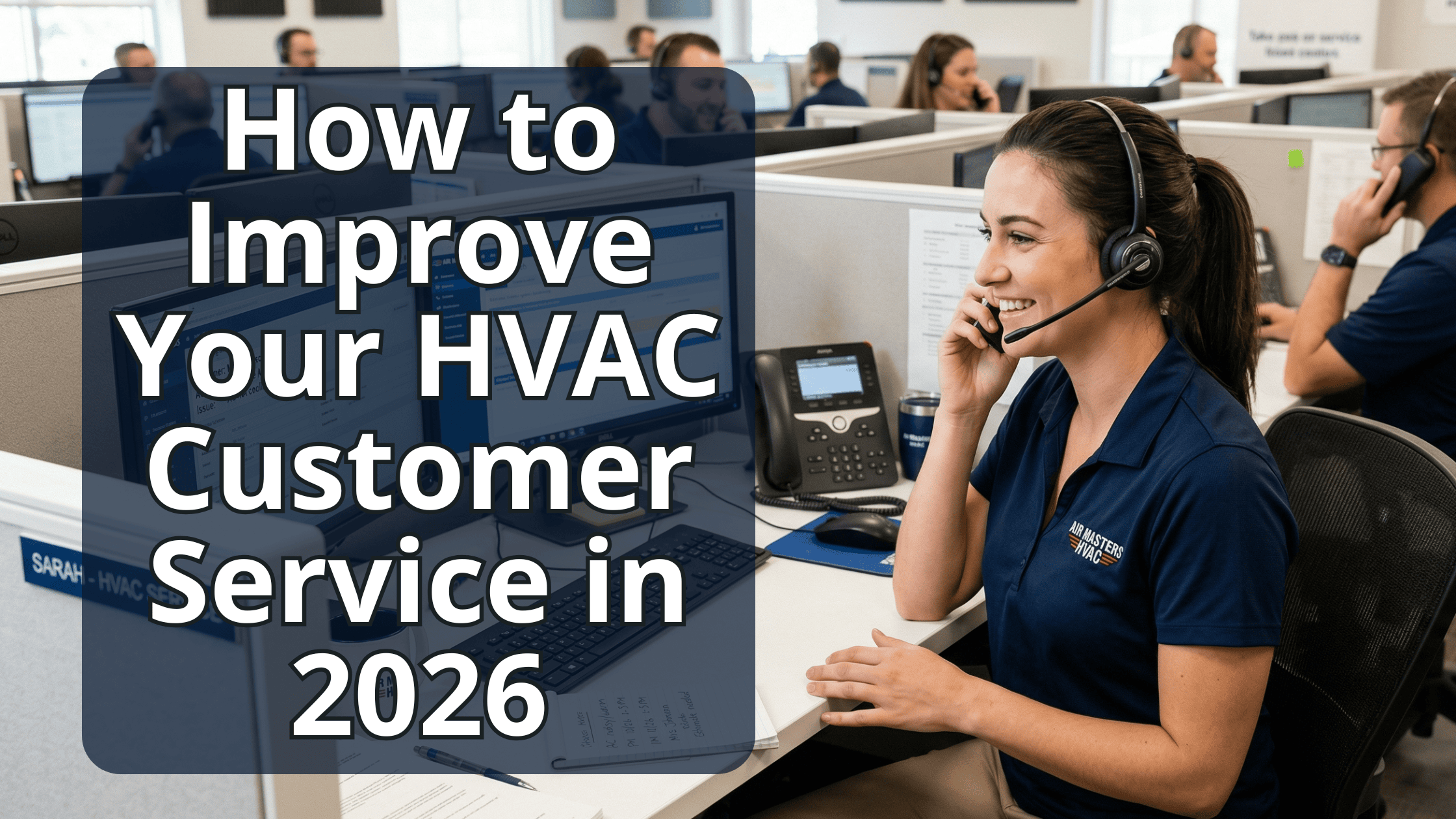
To thrive, any HVAC company needs a steady stream of incoming business.
If you are an HVAC business owner, you know that you rely on your team to deliver excellent customer service. The HVAC customer experience from the very first phone call to the final invoice must be exemplary to grow your business.
Without top-notch HVAC CSRs, an HVAC business will struggle to expand beyond a small operation. They won’t be able to build their brand, boost customer loyalty, or generate referrals and repeat business.
In 2026, excellent HVAC customer service is what truly distinguishes an average HVAC company from one that excels in the market.
This article will explore the fundamentals of HVAC customer service and specific ways to enhance the customer experience for your business.
If you are an HVAC CSR looking to grow an HVAC career, then you have a great deal of opportunity.
The role of the Customer Service Representative (CSR) is vital to the success of any HVAC company. Without appointments scheduled, revenue cannot be generated, and the business cannot grow.
What is HVAC Customer Service?
HVAC Customer Service encompasses the entire journey a customer takes before, during, and after their repair, maintenance, or installation of air conditioning services.
Effective HVAC customer service goes beyond merely booking a job, collecting contact details, or processing payments. It involves managing the customer’s complete interaction with your HVAC company. It also requires understanding HVAC fundamentals, coordinating tasks with each HVAC tech, and managing each customer interaction.
High-quality HVAC customer service enables customers to resolve their issues efficiently. Good customer service cultivates loyal, long-term clients and significantly increases profits for any HVAC company.
Why is HVAC Customer Service Important?
Every HVAC contractor understands that attracting and retaining customers is crucial for expanding a HVAC business.
Before a HVAC technician can focus on fixing, maintaining, or replacing systems, several preliminary steps must be completed. Key responsibilities of the HVAC customer service representative include setting proper expectations for potential customers and ensuring outstanding customer support.
How Does HVAC Customer Service Help Grow Profits?
Any company that successfully improves customer retention will likely see higher demand for air conditioning repair during peak seasons and sell more indoor air quality services throughout the year.
Satisfied customers will leave positive reviews on platforms like Google Business Profile and readily refer family and friends when asked for a reliable HVAC contractor.
Essentially, achieving high customer satisfaction is more impactful than any targeted advertising, press release, or other marketing efforts.
HVAC systems require ongoing maintenance and repairs throughout their lifespan. By delivering exceptional HVAC customer service, you will retain customers and dramatically increase your profits.
What is a CSR in HVAC?
A CSR in HVAC is a Customer Service Representative.
The primary function of the HVAC CSR is to handle the initial contact with customers needing assistance with their air conditioning, heating, or other HVACR services.
Typically, a CSR manages the first call with new HVAC customers, communicates with existing customers, and makes outbound calls to schedule maintenance or repair appointments.
The CSR role involves a mix of scheduling calls, answering customer inquiries, managing complaints and concerns, discussing appointment specifics, and explaining service costs.
The CSR is the customer’s first point of contact with the HVAC business. A strong emphasis on quality service, empathy, and customer care can make your business stand out from the competition.
How to Build a High-Performing HVAC Customer Service Team
Generally, HVAC customer service is managed by the Customer Service Representative on the team. An HVAC CSR is responsible for both providing customer support and ensuring customer satisfaction throughout the entire relationship with the company.
A CSR serves as the initial contact for all new customers, as well as for existing customers who require help and support.
In the HVAC industry, the CSR role is one of the most vital and essential for establishing trust and managing customer expectations.
If there are customer worries, complaints, or questions, the CSR is the person designated to handle them on behalf of the team.
A CSR must be skilled not only in communication but also in planning, using a CRM software tool, and managing the schedules of the HVAC technicians.
What Are The Responsibilities of the HVAC CSR?
To guarantee proper customer support and an outstanding customer experience, a CSR must possess both strong communication skills and relevant technical HVAC industry knowledge.
The combination of communication and appointment-scheduling expertise is what defines a great customer service representative.
- Greeting and welcoming new HVAC customers over the phone
- Answering questions from new customers
- Gathering essential customer information
- Managing customer consent preferences for their appointment
- Understanding potential issues with a customer’s AC unit
- Providing information about air conditioning services
- Booking new HVAC customer appointments
- Handling HVAC customer complaints
- Establishing trust with HVAC customers as part of the first impression
- Explaining HVAC pricing and payment policies
- Helping HVAC customers feel comfortable and well-cared for
A blend of specific customer service skills and abilities helps you deliver an exceptional customer service experience.
The most critical HVAC customer service skills include communication, active listening, technical knowledge, and patience.
The same communication skills that make an HVAC technician highly skilled are also valuable for a CSR providing good customer service.
By incorporating these HVAC customer service elements, you can offer customers a memorable experience and build a base of loyal HVAC clients.
How a CSR Build Trusts with HVAC Customers
- Be friendly and professional. Answering calls with a courteous, polite, respectful, and friendly tone ensures new HVAC customers feel respected and encourages them to book services with your company.
- Be responsive and timely. When a customer calls, answer the phone quickly and clearly communicate the type of service you can offer. If you cannot resolve the issue right away, keep the customer informed about your progress.
- Be knowledgeable. Ensure you have a solid grasp of HVAC systems and common problems, and be able to answer customers’ basic questions clearly and concisely. If you don’t know the answer, offer to consult with a technician on your team.
- Be patient. Many new customers have little to no knowledge of HVAC systems or how they can malfunction. Customers can sometimes be upset and stressed if their air conditioning breaks down in the middle of summer. The ability to remain patient and answer all their questions will help put them at ease.
- Be clear about costs and the process. When a customer schedules an appointment, be transparent about all costs and the timeline for the HVAC service visit. Many HVAC customers rarely deal with AC issues and might not fully understand what’s involved. The more you can explain about the HVAC service call, the better prepared the person will be and the more positive their customer experience will be.
- Consistent follow-up. After your HVAC team has resolved a customer’s problem, follow up with them to ensure they are completely satisfied. This extra step demonstrates that your team cares about their needs and wants to confirm their happiness with the HVAC services provided.
Not every day as a CSR will be easy. You will encounter angry customers and frustrated HVAC technicians who are busy and overstretched. Your role as a CSR is to manage all of them with a calm, confident approach.
Getting Started as an HVAC CSR
The HVAC CSR role is a delicate balancing act that demands patience and confidence. There can be time constraints, and customers may be emotional if their air conditioner has stopped working.
High-quality customer service and customer care begin with empathy and a genuine desire to help people solve their problems. In the CSR role, it is essential to understand the AC repair needs of a potential customer as well as how to optimize the performance of your technicians each day.
Here are several steps you can take to ensure you provide exceptional customer service in your CSR role.
Seek the necessary education and training. Numerous HVAC customer service training programs are available both online and in person. These HVAC CSR training programs will teach you the fundamentals of HVAC systems, along with the communication skills needed to deliver excellent customer service.
Gain Real-time experience. The best way to learn about HVAC customer service is by gaining hands-on experience in the field. You can do this by securing an entry-level position at an HVAC company, such as a CSR or dispatcher.
Learn about the HVAC industry. By connecting with professionals working in HVAC customer service, you can learn best practices that have contributed to their success. You might consider creating a CSR mastermind or in-house training groups that can help keep everyone improving and growing in their role.
Develop your people skills. In addition to the skills acquired through training, other skills are beneficial in HVAC customer service, such as communication, problem-solving, and customer relations. Take time to enhance these soft skills to make yourself stand out in your CSR role.
Keep learning and growing. Getting into HVAC customer service can be challenging, so don’t give up if you don’t land your ideal job immediately. As you gain experience and knowledge, you can apply for higher-level CSR positions and potentially move into a Dispatch role within an HVAC company.
Upgrade Your HVAC Customer Service Experience
Remember that new customers are the lifeline of any HVAC business.
Before your technicians can work on a system or make any sales, you must first book appointments. The purpose of the HVAC CSR role is to secure the call and provide outstanding customer care on every interaction.
Happy customers leave positive online reviews and refer friends when they need an HVAC company. Nothing grows a business more effectively than excellent customer service.
It all starts by exploring ways to enhance and improve your HVAC customer service standards and successfully solve the customer’s HVAC system problems.
As an HVAC company, there are many minor things you can do to differentiate yourself from the competition and make a positive impact.
For a CSR working in an HVAC company, the future is bright, and career opportunities are growing..
Need help transforming your service department into a significant profit center? The BDR HVAC business coaching programs are your best place to start. Reach out to us today to see how we can help support your CSR and sales team to boost revenue and grow profit in 2026.
Share This Blog